Health-first lean bulk on TRT – my complete approach

Back Health-first lean bulk on TRT – my complete approach
  • Thread Author
Hi everyone,

I've been following this forum for quite a while, and I finally decided to share my current protocol and the philosophy behind it.

I'm 41 years old, 186 cm tall and currently weigh 90 kg at around 11–12% body fat.

I've been training for almost 25 years. Like many people, I've had some longer breaks over the years, but during the last 2.5 years my entire approach has changed. Training, nutrition and recovery are no longer based on guesswork—they're based on planning, tracking and continuous learning.

Why TRT?​

Almost two years ago I was diagnosed with secondary hypogonadism.

My total testosterone wasn't extremely low (around 8–10 nmol/L), but my LH and FSH were almost non-existent.

Starting TRT wasn't an impulsive decision.

Before my first injection, I spent almost a full year reading scientific literature, following experienced physicians and learning from people with long-term TRT experience. I wanted to understand not only the benefits, but also the risks, monitoring and long-term health implications.

Only after that did I decide to start.

My philosophy​

One thing I've learned is that more drugs don't automatically build a better physique.

My goal isn't to run the biggest stack possible.

My goal is to build the best physique I can while using the lowest effective doses and keeping my health under control.

If I'm still progressing at 45 or 50 years old with healthy blood work, normal blood pressure and good cardiovascular health, I'll consider that a much bigger achievement than gaining muscle as fast as possible.

Current goal​

I'm currently in a lean bulk.

Current stats:
  • Age: 41
  • Height: 186 cm
  • Weight: 90 kg
  • Body fat: ~11–12%
Long-term goal:

94–96 kg while staying around 8% body fat.

I'm not chasing rapid progress. I'd rather improve slowly if it means I can keep doing this for decades.

Current protocol​

Testosterone Enanthate​

170 mg/week.

I inject 0.18 ml every other day.

Instead of drawing directly with insulin syringes, I use Luer Lock syringes together with Mini Spike adapters to backfill insulin syringes, followed by subcutaneous injections into the upper glute.

This protocol gives me very stable hormone levels and has completely eliminated the ups and downs I experienced with larger injections.

HGH​

1.5 IU every morning.

I'm not using HGH because I want to become as big as possible.

For me, the priorities are:
  • recovery
  • connective tissue support
  • long-term progression
  • better overall recovery between training sessions

Why I don't add more compounds​

I experimented with Masteron in the past.

Unfortunately it wasn't a good fit for my body. It negatively affected my estrogen balance, so I decided to stop using it.

That experience reinforced something I strongly believe today:

Every compound should fit the individual—not the other way around.

I'm much more interested in finding the minimum effective protocol than constantly adding more drugs.

Cardiovascular health comes first​

Ironically, one of the things I'm most proud of isn't my physique.

It's my blood pressure.

Before optimizing my protocol, it regularly sat around 130–140 mmHg.

Today it's consistently around 120/75 mmHg.

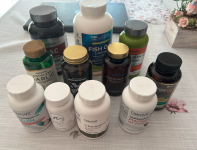
To support that I currently use:
  • Telmisartan 20 mg daily
  • Omega-3
  • Citrus Bergamot
  • Curcumin
  • CoQ10
For me, cardiovascular health is just as important as muscle growth.

What I monitor​

I don't rely only on how I feel.

I prefer objective data whenever possible.

I regularly monitor:
  • Blood pressure
  • ApoB
  • LDL cholesterol
  • Complete lipid panel
  • Hematocrit
  • Full blood work
  • Morning resting heart rate
  • Sleep quality using my Apple Watch
I've spent quite a bit of time improving both my LDL cholesterol and my blood pressure, so I'm always interested in learning from people with similar priorities.

I'll share my latest blood work in a separate update once the results are available.

Training​

I currently train 4 days per week using an Upper/Lower split.

Every workout is logged and progression is planned.

My biggest weak point is shoulder development, so my training is specifically designed around bringing that area up while maintaining overall balance.

Nutrition​

Nothing extreme.

Around 2700 kcal/day.
  • Protein: 192 g
  • Carbohydrates: 337 g
  • Fat: 66 g
I believe consistency beats perfection.

About the photos​

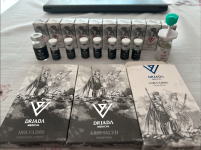
You'll notice Aromasin and Nolvadex in the picture.

They are not part of my current protocol.

I only used them briefly while dialing in TRT and now simply keep them available as a precaution if they're ever needed.

Thankfully, my current protocol has been stable for quite some time without requiring either.

Final thoughts​

I know this isn't the biggest stack on the forum.

That's intentional.

My goal isn't to collect more compounds.

My goal is to build the best physique I can while protecting my long-term health.

I'm always open to constructive criticism and new ideas, especially from people who also prioritize longevity over simply increasing dosages.

If you have any questions about my protocol, injection method, monitoring or anything else, I'll be happy to answer.

Looking forward to hearing your thoughts and discussing different approaches with you all. I'll update this thread with my upcoming blood work as soon as it's available.
 

Attachments

  • Kép. 2026. 07. 11. - 9.19.png
    Kép. 2026. 07. 11. - 9.19.png
    1.7 MB · Views: 1,135
  • Kép. 2026. 07. 11. - 9.20.png
    Kép. 2026. 07. 11. - 9.20.png
    1.7 MB · Views: 68
Hi everyone,

I've been following this forum for quite a while, and I finally decided to share my current protocol and the philosophy behind it.

I'm 41 years old, 186 cm tall and currently weigh 90 kg at around 11–12% body fat.

I've been training for almost 25 years. Like many people, I've had some longer breaks over the years, but during the last 2.5 years my entire approach has changed. Training, nutrition and recovery are no longer based on guesswork—they're based on planning, tracking and continuous learning.

Why TRT?​

Almost two years ago I was diagnosed with secondary hypogonadism.

My total testosterone wasn't extremely low (around 8–10 nmol/L), but my LH and FSH were almost non-existent.

Starting TRT wasn't an impulsive decision.

Before my first injection, I spent almost a full year reading scientific literature, following experienced physicians and learning from people with long-term TRT experience. I wanted to understand not only the benefits, but also the risks, monitoring and long-term health implications.

Only after that did I decide to start.

My philosophy​

One thing I've learned is that more drugs don't automatically build a better physique.

My goal isn't to run the biggest stack possible.

My goal is to build the best physique I can while using the lowest effective doses and keeping my health under control.

If I'm still progressing at 45 or 50 years old with healthy blood work, normal blood pressure and good cardiovascular health, I'll consider that a much bigger achievement than gaining muscle as fast as possible.

Current goal​

I'm currently in a lean bulk.

Current stats:
  • Age: 41
  • Height: 186 cm
  • Weight: 90 kg
  • Body fat: ~11–12%
Long-term goal:

94–96 kg while staying around 8% body fat.

I'm not chasing rapid progress. I'd rather improve slowly if it means I can keep doing this for decades.

Current protocol​

Testosterone Enanthate​

170 mg/week.

I inject 0.18 ml every other day.

Instead of drawing directly with insulin syringes, I use Luer Lock syringes together with Mini Spike adapters to backfill insulin syringes, followed by subcutaneous injections into the upper glute.

This protocol gives me very stable hormone levels and has completely eliminated the ups and downs I experienced with larger injections.

HGH​

1.5 IU every morning.

I'm not using HGH because I want to become as big as possible.

For me, the priorities are:
  • recovery
  • connective tissue support
  • long-term progression
  • better overall recovery between training sessions

Why I don't add more compounds​

I experimented with Masteron in the past.

Unfortunately it wasn't a good fit for my body. It negatively affected my estrogen balance, so I decided to stop using it.

That experience reinforced something I strongly believe today:

Every compound should fit the individual—not the other way around.

I'm much more interested in finding the minimum effective protocol than constantly adding more drugs.

Cardiovascular health comes first​

Ironically, one of the things I'm most proud of isn't my physique.

It's my blood pressure.

Before optimizing my protocol, it regularly sat around 130–140 mmHg.

Today it's consistently around 120/75 mmHg.

To support that I currently use:
  • Telmisartan 20 mg daily
  • Omega-3
  • Citrus Bergamot
  • Curcumin
  • CoQ10
For me, cardiovascular health is just as important as muscle growth.

What I monitor​

I don't rely only on how I feel.

I prefer objective data whenever possible.

I regularly monitor:
  • Blood pressure
  • ApoB
  • LDL cholesterol
  • Complete lipid panel
  • Hematocrit
  • Full blood work
  • Morning resting heart rate
  • Sleep quality using my Apple Watch
I've spent quite a bit of time improving both my LDL cholesterol and my blood pressure, so I'm always interested in learning from people with similar priorities.

I'll share my latest blood work in a separate update once the results are available.

Training​

I currently train 4 days per week using an Upper/Lower split.

Every workout is logged and progression is planned.

My biggest weak point is shoulder development, so my training is specifically designed around bringing that area up while maintaining overall balance.

Nutrition​

Nothing extreme.

Around 2700 kcal/day.
  • Protein: 192 g
  • Carbohydrates: 337 g
  • Fat: 66 g
I believe consistency beats perfection.

About the photos​

You'll notice Aromasin and Nolvadex in the picture.

They are not part of my current protocol.

I only used them briefly while dialing in TRT and now simply keep them available as a precaution if they're ever needed.

Thankfully, my current protocol has been stable for quite some time without requiring either.

Final thoughts​

I know this isn't the biggest stack on the forum.

That's intentional.

My goal isn't to collect more compounds.

My goal is to build the best physique I can while protecting my long-term health.

I'm always open to constructive criticism and new ideas, especially from people who also prioritize longevity over simply increasing dosages.

If you have any questions about my protocol, injection method, monitoring or anything else, I'll be happy to answer.

Looking forward to hearing your thoughts and discussing different approaches with you all. I'll update this thread with my upcoming blood work as soon as it's available.
Hey Bede!

Honestly, I like this approach a lot. The doses are sensible, the health markers matter to you, and the goal is built around years, not weeks. That’s exactly how a 41-year-old with experience should think.

Only one criticism: use a little less GPT next time, brother 😂 You’ve written enough to qualify as a TRT white paper. And yes, seriously, a bit less GPT. We want your voice too, not only the university thesis version of you.

Beyond the joke, the philosophy is excellent: minimum effective dose, stable blood pressure, regular bloodwork, and compounds that fit the individual. Keep that mindset and you’ll probably still be progressing when many others are already paying for their impatience.

Looking forward to the bloodwork update!

Shark
 
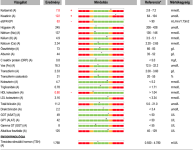
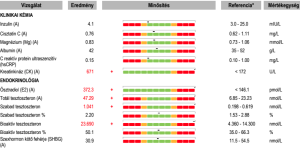
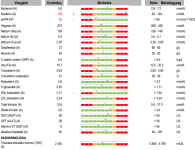
As promised, I'm attaching the parts of the blood work that matter the most to me. If anyone is interested in the complete panel, I'll happily upload the rest.
Honestly, I get just as excited about my blood work as I do about seeing changes in the mirror.
For me, gaining muscle is only part of the journey. Knowing that I'm moving in the right direction health-wise is just as rewarding.
One result I'm especially happy about is my lipid profile.
A while ago my LDL was 3.16 mmol/L. Instead of accepting it as "that's just what happens on TRT", I decided to work on it.
I focused on improving my diet, stayed consistent with my routine and added a few supplements that made sense for me, like Telmisartan, Citrus Bergamot, Omega-3, Curcumin and CoQ10.
My latest LDL came back at 2.24 mmol/L, and my ApoB is 70 mg/dL, which I'm really happy with.
My blood pressure has also improved a lot over the last couple of years. It used to be around 130–140 mmHg, and now it averages around 120/75 mmHg.
Everything isn't perfect though.
My HDL is still lower than I'd like, so that's something I'll keep working on. I don't expect perfect numbers—I just want to keep moving in the right direction.
One thing worth mentioning is the CK value. It was elevated because the blood test was taken after heavy training, so that wasn't a surprise.
For me, this is what TRT is really about.
Not chasing the highest testosterone number or adding more compounds every few months.
It's about building the best physique I can while staying healthy enough to enjoy this lifestyle for many years.
I'm curious...
How many of you check ApoB regularly, or do you mostly rely on the standard lipid panel?
I'd also be interested in hearing if anyone has managed to improve HDL without negatively affecting LDL.
 

Attachments

  •  - 15.06.03.png
    - 15.06.03.png
    67.2 KB · Views: 19
  • - 15.07.19.png
    - 15.07.19.png
    101 KB · Views: 19
  • 026-07-12 - 15.07.49.png
    026-07-12 - 15.07.49.png
    11.9 KB · Views: 20
  • 09.24.png
    09.24.png
    102.1 KB · Views: 22
As promised, I'm attaching the parts of the blood work that matter the most to me. If anyone is interested in the complete panel, I'll happily upload the rest.
Honestly, I get just as excited about my blood work as I do about seeing changes in the mirror.
For me, gaining muscle is only part of the journey. Knowing that I'm moving in the right direction health-wise is just as rewarding.
One result I'm especially happy about is my lipid profile.
A while ago my LDL was 3.16 mmol/L. Instead of accepting it as "that's just what happens on TRT", I decided to work on it.
I focused on improving my diet, stayed consistent with my routine and added a few supplements that made sense for me, like Telmisartan, Citrus Bergamot, Omega-3, Curcumin and CoQ10.
My latest LDL came back at 2.24 mmol/L, and my ApoB is 70 mg/dL, which I'm really happy with.
My blood pressure has also improved a lot over the last couple of years. It used to be around 130–140 mmHg, and now it averages around 120/75 mmHg.
Everything isn't perfect though.
My HDL is still lower than I'd like, so that's something I'll keep working on. I don't expect perfect numbers—I just want to keep moving in the right direction.
One thing worth mentioning is the CK value. It was elevated because the blood test was taken after heavy training, so that wasn't a surprise.
For me, this is what TRT is really about.
Not chasing the highest testosterone number or adding more compounds every few months.
It's about building the best physique I can while staying healthy enough to enjoy this lifestyle for many years.
I'm curious...
How many of you check ApoB regularly, or do you mostly rely on the standard lipid panel?
I'd also be interested in hearing if anyone has managed to improve HDL without negatively affecting LDL.
Bede!!! Thanks for sharing it!

Now that I’ve looked properly at the full picture, I’ll tell you exactly what I see.

First, you deserve real credit. Bringing LDL down from 3.16 to 2.24, keeping triglycerides extremely low, getting ApoB to 70 and bringing your blood pressure from the 130–140 range to around 120/75 is not luck. That is the result of repeated good decisions. ApoB is one of the most useful markers for understanding the number of particles that can actually cause trouble in the arteries, and 70 is a very respectable result.

Your inflammation, insulin, liver and thyroid markers also look very good. That tells me your nutrition, conditioning and general lifestyle are doing their job. The CK of 671 does not frighten me in someone who trained hard before the test. Heavy training can raise it considerably, so I would simply repeat it after several rest days if you want a clean baseline.

Now the parts I would not ignore.

Your creatinine-based kidney result looks poor on paper, with creatinine at 139 and eGFR at 53. However, your cystatin C is excellent at 0.76. In a muscular man who trains hard and may use creatine, creatinine can make kidney function look worse than it really is. The cystatin C result is very reassuring, but I still wouldn’t just shrug it off. Repeat the test rested and well hydrated, and add a urine albumin-to-creatinine ratio. The smartest approach is to judge both kidney markers together, not panic over one and not ignore the other. KDIGO also recommends using creatinine together with cystatin C when the creatinine result may be misleading.

The HDL is low, yes, but I would not become obsessed with trying to artificially “raise HDL.” Keep improving aerobic fitness, diet quality and body composition, but remember that ApoB, LDL, blood pressure and not smoking matter far more than forcing one number upward with another supplement.

The one thing I would challenge you on as a friend is calling this purely TRT based on the blood level. Total testosterone at 47.29 nmol/L, with free and bioavailable testosterone also well above range, is not a normal replacement result. Estradiol at 372 is also high. That does not automatically mean you need an AI or that something is wrong, especially if you feel excellent, but the timing of the blood draw matters enormously. If this was close to an injection, it may simply be the peak. If it was your lowest point before the next injection, then the dose is giving you far more than replacement.

TRT should replace what is missing, not turn the laboratory range into a competition. Medical guidance generally aims for testosterone in the mid-normal range, not several times above it.

So my honest conclusion is this:

Your cardiovascular progress is genuinely excellent!! Your metabolic health looks strong. Your liver looks calm. Your kidney picture is probably much better than creatinine alone suggests, but deserves confirmation. Your hormone exposure is higher than the word “TRT” suggests, and that is the one area where I would slow down and look carefully before ever adding anything else.

You are doing many things right, brother!! Just remember that good bloodwork is not permission to push harder. It is proof that the current discipline is working.

The real victory is not having the most impressive panel today. It is being able to show us numbers this good again at 45, 50 and 55 while still training, progressing and enjoying your life.

That is the game worth winning.

Now let’s be a BEAST!!

Shark
 
Bede!!! Thanks for sharing it!

Now that I’ve looked properly at the full picture, I’ll tell you exactly what I see.

First, you deserve real credit. Bringing LDL down from 3.16 to 2.24, keeping triglycerides extremely low, getting ApoB to 70 and bringing your blood pressure from the 130–140 range to around 120/75 is not luck. That is the result of repeated good decisions. ApoB is one of the most useful markers for understanding the number of particles that can actually cause trouble in the arteries, and 70 is a very respectable result.

Your inflammation, insulin, liver and thyroid markers also look very good. That tells me your nutrition, conditioning and general lifestyle are doing their job. The CK of 671 does not frighten me in someone who trained hard before the test. Heavy training can raise it considerably, so I would simply repeat it after several rest days if you want a clean baseline.

Now the parts I would not ignore.

Your creatinine-based kidney result looks poor on paper, with creatinine at 139 and eGFR at 53. However, your cystatin C is excellent at 0.76. In a muscular man who trains hard and may use creatine, creatinine can make kidney function look worse than it really is. The cystatin C result is very reassuring, but I still wouldn’t just shrug it off. Repeat the test rested and well hydrated, and add a urine albumin-to-creatinine ratio. The smartest approach is to judge both kidney markers together, not panic over one and not ignore the other. KDIGO also recommends using creatinine together with cystatin C when the creatinine result may be misleading.

The HDL is low, yes, but I would not become obsessed with trying to artificially “raise HDL.” Keep improving aerobic fitness, diet quality and body composition, but remember that ApoB, LDL, blood pressure and not smoking matter far more than forcing one number upward with another supplement.

The one thing I would challenge you on as a friend is calling this purely TRT based on the blood level. Total testosterone at 47.29 nmol/L, with free and bioavailable testosterone also well above range, is not a normal replacement result. Estradiol at 372 is also high. That does not automatically mean you need an AI or that something is wrong, especially if you feel excellent, but the timing of the blood draw matters enormously. If this was close to an injection, it may simply be the peak. If it was your lowest point before the next injection, then the dose is giving you far more than replacement.

TRT should replace what is missing, not turn the laboratory range into a competition. Medical guidance generally aims for testosterone in the mid-normal range, not several times above it.

So my honest conclusion is this:

Your cardiovascular progress is genuinely excellent!! Your metabolic health looks strong. Your liver looks calm. Your kidney picture is probably much better than creatinine alone suggests, but deserves confirmation. Your hormone exposure is higher than the word “TRT” suggests, and that is the one area where I would slow down and look carefully before ever adding anything else.

You are doing many things right, brother!! Just remember that good bloodwork is not permission to push harder. It is proof that the current discipline is working.

The real victory is not having the most impressive panel today. It is being able to show us numbers this good again at 45, 50 and 55 while still training, progressing and enjoying your life.

That is the game worth winning.

Now let’s be a BEAST!!

Shark
Thanks a lot, Shark!
I really appreciate you taking the time to go through everything in such detail. This is exactly the kind of discussion I was hoping to have when I started this thread.
You made a very good point about my testosterone level.

One important detail I forgot to mention is that I always do my blood work the same way every three months: I inject at 8:00 PM, then have my blood drawn at around 7:00 AM the following morning. So these values were taken fairly close to an injection and definitely don't represent my trough level.
Another important point is that these blood results were taken while I was still using 0.20–0.21 ml EOD. After seeing these numbers, I actually reduced my dose to 0.18 ml EOD, because I wasn't trying to push my testosterone higher. My personal goal has always been to find the lowest effective dose that gives me good well-being, stable libido and allows me to keep progressing in the gym. Looking back over the last two years, that sweet spot for me seems to be somewhere around 30–35 nmol/L, so I'm interested to see what my next blood work looks like on the lower dose.
Regarding kidney function, that's exactly why I decided to include Cystatin C instead of relying only on creatinine. I also take 4–5 g of creatine daily, and this blood test was done the morning after a leg workout, so neither the creatinine nor the CK result surprised me too much.
I also make sure I'm well hydrated before every blood test. I usually drink at least 1–1.5 litres of water, because dehydration can easily distort several lab values.
I haven't measured urine ACR yet, but I really like that suggestion and I'll definitely add it to my next blood work.
As for HGH, I've only been using it for about three weeks, so none of these blood results reflect HGH use yet. It'll be interesting to see what, if anything, changes over the next few months.
One thing I've learned over the last two years is that it's much easier to convince yourself you're healthy than to actually prove it with objective data.

That's why I keep measuring.

Thanks again for the feedback, brother. I genuinely appreciate it. 👊
 
I appreciate the effort put into writing the post. Look solid and seems you're very good and smart for you health management.

Keep going 🙏
 
Thanks a lot, Shark!
I really appreciate you taking the time to go through everything in such detail. This is exactly the kind of discussion I was hoping to have when I started this thread.
You made a very good point about my testosterone level.

One important detail I forgot to mention is that I always do my blood work the same way every three months: I inject at 8:00 PM, then have my blood drawn at around 7:00 AM the following morning. So these values were taken fairly close to an injection and definitely don't represent my trough level.
Another important point is that these blood results were taken while I was still using 0.20–0.21 ml EOD. After seeing these numbers, I actually reduced my dose to 0.18 ml EOD, because I wasn't trying to push my testosterone higher. My personal goal has always been to find the lowest effective dose that gives me good well-being, stable libido and allows me to keep progressing in the gym. Looking back over the last two years, that sweet spot for me seems to be somewhere around 30–35 nmol/L, so I'm interested to see what my next blood work looks like on the lower dose.
Regarding kidney function, that's exactly why I decided to include Cystatin C instead of relying only on creatinine. I also take 4–5 g of creatine daily, and this blood test was done the morning after a leg workout, so neither the creatinine nor the CK result surprised me too much.
I also make sure I'm well hydrated before every blood test. I usually drink at least 1–1.5 litres of water, because dehydration can easily distort several lab values.
I haven't measured urine ACR yet, but I really like that suggestion and I'll definitely add it to my next blood work.
As for HGH, I've only been using it for about three weeks, so none of these blood results reflect HGH use yet. It'll be interesting to see what, if anything, changes over the next few months.
One thing I've learned over the last two years is that it's much easier to convince yourself you're healthy than to actually prove it with objective data.

That's why I keep measuring.

Thanks again for the feedback, brother. I genuinely appreciate it. 👊

Beer… this was like having you seated at my office while planing the next coached season, that’s EXACTLY the answer I was hoping to read. 😬

The fact that you reduced the dose after seeing the labs instead of convincing yourself that “higher is better” tells me you’ve already understood what this lifestyle is really about. Anyone can increase a dose. Very few people have the discipline to lower it when the data says it’s the smarter move.

I also like that you’re thinking ahead with the urine ACR and that you understand the context behind creatinine and CK. That’s how bloodwork should be interpreted: never in isolation, always with the full picture.

Keep following that philosophy, brother. Don’t chase the highest testosterone level, chase the highest quality of life. If you can still train hard, feel great and post bloodwork like this another 10 years from now, you’ll have done something most people in this game never achieve.

Waiting to your next update!!

Shark
 
A small personal update.

After all the great discussions over the last few days, I realized I never really explained why I spent almost a year studying before starting TRT.
When I was diagnosed with secondary hypogonadism, a lot of people told me the answer was simple:

"Just start TRT."

But that didn't feel right to me.
Instead, I spent almost a year trying to understand what was happening. I read studies, listened to experienced physicians, followed people who had been on long-term TRT, and tried to learn as much as I could before making a decision that I knew could affect the rest of my life.
I also tried different natural approaches first. Looking back, none of them solved the underlying problem, but I'm still glad I tried. It gave me peace of mind knowing that TRT wasn't my first option—it was my last.
That year completely changed the way I look at this lifestyle.
I stopped asking:
"What's the biggest dose I can tolerate?"
and started asking:
"What's the lowest dose that gives me the results I'm looking for?"
Ironically, that's exactly why I reduced my testosterone dose after my last blood work. The numbers were higher than I wanted, so lowering the dose was the obvious decision.
A few years ago, I probably would have celebrated those higher numbers.
Today, I see them as just another piece of information helping me make better decisions.
Another reason I care so much about long-term health is my 10-year-old daughter.
I want her to grow up seeing that training isn't about ego or shortcuts.
It's about discipline.
Taking care of yourself.
Keeping promises to yourself.
Making decisions that will still make sense ten or twenty years from now.
If one day she remembers that her dad always trained, stayed active and looked after his health, I'll be proud of that. I think that's a much better example than simply trying to be the biggest guy in the room.
One sentence from Shark's reply really stayed with me:
"Don't chase the highest testosterone level, chase the highest quality of life.""Don't chase the highest testosterone level, chase the highest quality of life."
That perfectly describes where my mindset is today.
I'm still trying to build muscle.
I'm still trying to improve.
But I want to do it in a way that allows me to enjoy this lifestyle for many years, not just the next few.
Thanks again to everyone who has taken the time to comment, challenge my thinking and share their own experiences.
I've genuinely learned a lot already, and I'm looking forward to continuing the journey with all of you.
 
In fact, this change in mindset is really a very good thing.

You go from questions that everyone asks themselves without thinking about the consequence (and often in the abuse of product use) to those that are logical to live a serene and healthy life.

The funny thing is that every thought you have is actually like the back of the same coin. Or like taking the red pill or the blue pill.

You are lucid in your reflections / own asking and your choices. Like it 👍
 
5-week HGH update

I wanted to share a quick update after five weeks of adding HGH to my protocol.

I still think it’s too early to draw any firm conclusions, especially before my next bloodwork, but I wanted to document the objective changes I’ve observed so far.

I’m currently using 1.6 IU every morning upon waking. I train fasted, so this timing fits my routine well. Another reason I chose morning administration is because natural GH secretion peaks during the night, and I’d rather not interfere with that physiological rhythm.

Mini cut

Three weeks ago I also started a mini cut after several months of a lean bulk. The goal wasn’t to chase a specific number on the scale—I simply no longer felt comfortable with the amount of fat around my waist and wanted my abs to become visible again before continuing to gain size.

If recovery and performance remain strong, I may continue until around 8% body fat. The mirror is much more important to me than the number on the scale.

Despite eating in roughly a 500 kcal daily deficit, my training performance has continued to improve. Almost every session I’m still able to add either an extra rep or a small amount of weight, which has been a pleasant surprise.

Current observations after 5 weeks

Sleep
  • According to my Apple Watch, both REM sleep and deep sleep have increased.
Training
  • Strength progression has continued despite being in a calorie deficit.
Body weight
  • Around 1 kg lost during the first week of the mini cut, followed by approximately 0.2–0.5 kg per week afterwards.
Blood glucose
  • Fasting glucose has remained unchanged at 4.9–5.2 mmol/L.
Blood pressure
  • Stable at approximately 115–120 / 70–80 mmHg.
Resting heart rate
  • No meaningful changes.
Water retention
  • Some increase, which was expected.
Hand numbness
  • Mild numbness appeared during the first few days but completely disappeared after about a week and a half.
Skin
  • My skin has become noticeably less oily, and my seborrheic dermatitis has improved significantly.
One unexpected observation was that a mild hemorrhoid issue, which had caused occasional bleeding once or twice a week for quite some time, has completely settled down. I can’t say whether HGH is responsible, but the timing was interesting enough to mention.

One side effect

The only issue I’ve experienced so far was mild bilateral nipple sensitivity.

Since nothing else in my protocol had changed, one possible explanation could be the water retention associated with HGH or changes in hormone balance. However, I don’t want to jump to conclusions before seeing my bloodwork.

To be on the safe side, I introduced 6.25 mg exemestane every three days one week ago, and the nipple sensitivity has already resolved.

Bloodwork next week

Next week I’ll be doing a comprehensive blood panel after approximately six weeks on HGH.

I’ll be checking:
  • IGF-1
  • Total Testosterone
  • Free Testosterone
  • SHBG
  • Estradiol (E2)
  • Prolactin
  • Complete Blood Count
  • Hematocrit & Hemoglobin
  • Lipid Profile (HDL, LDL, etc.)
  • CRP
  • and the rest of my usual health markers.
I’m particularly interested in seeing how much my IGF-1 has increased after six weeks, and whether the nipple sensitivity was actually associated with elevated estradiol or something else entirely.

As always, I prefer making decisions based on objective data rather than assumptions. Once the laboratory results are back, I’ll post another update and compare the bloodwork with my subjective experience.

My goal has never been to use more compounds—it’s to understand exactly what each one adds, what it changes, and whether the benefits truly outweigh the risks.
 
Back
Top