You are using an out of date browser. It may not display this or other websites correctly.
You should upgrade or use an alternative browser.
You should upgrade or use an alternative browser.
Expert Answered Igf-1
- Thread starter pamri65
- Start date
BPC-157, TB-500, ipamorelin, MOTS-C, GHK-Cu and other peptides.

Pamri, assuming you mean IGF-1 DES vs IGF-1 LR3, they’re basically two different approaches to modifying IGF-1.Quali sono differenze tra il des e lr?
Quale sarebbe meglio utilizzare per eventualmente migliorare i muscoli carenti?
LR3 has been modified to remain active much longer, so people use it looking for a more prolonged systemic effect. DES is much shorter acting and is often discussed around local administration and bringing up specific muscles.
But brother, connecting this with your other thread, I think you’re jumping several chapters ahead

You’ve just told us that after only five weeks of Anavar your LH, FSH and testosterone came back low. Before thinking about IGF-1 variants for lagging body parts, I’d first get your hormonal situation understood and recovered, then look objectively at why those muscles are lagging.
Most stubborn body parts are still an execution problem before they’re a pharmacology problem: exercise selection, setup, ROM, progression, frequency and whether the target muscle is actually receiving the work you think it is.
Show me the physique and tell me which muscles you consider behind. I’d much rather help you attack the actual weakness than throw another compound at it.
Shark

There’s a nuance here.
First, I’ll explain a bit more about IGF-1. These compounds are very experimental, and there isn’t enough data to assume that they can somehow increase your lagging muscles locally. The reason is that these peptides have a systemic effect — meaning they will potentially increase IGF-1 levels, not just in the muscle.
Purely theoretically, PEG MGF is more suitable for this — but again, we don’t have enough data to say that it will work. These compounds haven’t been studied enough. I wouldn’t really expect them to somehow live up to your expectations.
Let’s first look at your problem — what do you mean by lagging glutes? What are you comparing them to? How did you determine that they’re lagging?
First, I’ll explain a bit more about IGF-1. These compounds are very experimental, and there isn’t enough data to assume that they can somehow increase your lagging muscles locally. The reason is that these peptides have a systemic effect — meaning they will potentially increase IGF-1 levels, not just in the muscle.
Purely theoretically, PEG MGF is more suitable for this — but again, we don’t have enough data to say that it will work. These compounds haven’t been studied enough. I wouldn’t really expect them to somehow live up to your expectations.
Let’s first look at your problem — what do you mean by lagging glutes? What are you comparing them to? How did you determine that they’re lagging?

What exercises do you do for your glutes, how often do you train them, and how many sets do you do?
It’s also important to understand that bigger glutes are more likely if you have long muscle insertions. Some people have relatively short muscles, which makes the glutes smaller but rounder. In other words, the muscle itself has greater growth potential if it inserts lower down.
Also, a low body fat percentage (and yours is really low) will affect the appearance of your glutes as well, because a lot of the volume in this area often comes from the layer of fat over the muscles.
It’s also important to understand that bigger glutes are more likely if you have long muscle insertions. Some people have relatively short muscles, which makes the glutes smaller but rounder. In other words, the muscle itself has greater growth potential if it inserts lower down.
Also, a low body fat percentage (and yours is really low) will affect the appearance of your glutes as well, because a lot of the volume in this area often comes from the layer of fat over the muscles.
- Thread Author
- #7
Li alleno tre volte a settimana per un totale di 8 serie a settimana. Gli esercizi sono: iperestensione per i glutei, abductor machine, hip trust, gluteos machine... Chiaramente l'altezza di 1,88 cm non aiuta però vorrei un po' più di volume nonostante la bassa percentuale di grasso corporeo
Pamri…Li alleno tre volte a settimana per un totale di 8 serie a settimana. Gli esercizi sono: iperestensione per i glutei, abductor machine, hip trust, gluteos machine... Chiaramente l'altezza di 1,88 cm non aiuta però vorrei un po' più di volume nonostante la bassa percentuale di grasso corporeo
Now we have something useful to work with. 8 total sets spread over three sessions is not much volume, especially if glutes are genuinely the body part you want to bring up.
Before thinking about IGF-1, I’d work on the basics: gradually increase productive volume, make the hip thrust a progression exercise, and add a movement where the glutes are heavily loaded in the stretched position, such as an RDL, Bulgarian split squat or deep lunge.
I would say keeping the abductor work as accessory work, not as a foundation.
At 1.88 m and very lean, they may also look flatter than you expect, so don’t judge everything by appearance alone (you will need to carb up fuller to judge and then deload back to clean)
Give that setup a proper growth phase and track strength, reps and photos. If the glutes still refuse to move, then we reassess. I would say Don’t reach for IGF-1 to solve a programming problem first.
Does it make sense? What do you think @Sam Bjorn ?

Shark
It’s not about height, but about the length of the glute muscle insertion (basically, how long the muscle itself is). If the muscle is long, it has greater growth potential. Look, I sent you a few
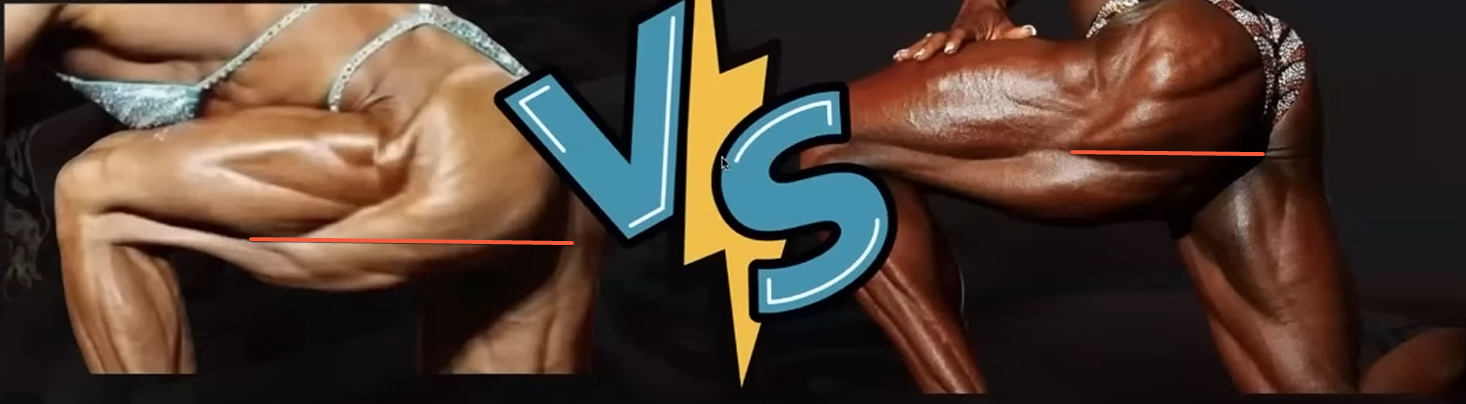

Yes, I agree with you @Donvitosharkone, especially that 8 sets isn’t much if we’re talking about the total number of sets per week. And yes, I also lean toward RDLs, Bulgarian split squats, or deep lunges being the foundation for building the gluteus maximus. But of course, execution and focusing on the gluteus maximus are important so that the load is targeted more specifically. Your quads and hamstrings will also be involved, which is completely normal, but you need to adjust your technique so that your glutes are getting the load.
Progressive overload is also important. With these basic exercises, strength programming and periodization can help. Let’s take one exercise, for example the RDL. The simplest example of periodization would be one lighter week with less weight, for example 3 sets of 12 reps at RIR 3, followed by a heavier week with 5 reps at RIR 1-2. It’s also possible to do the third week without RDLs at all, or do a light maintenance session of 10 reps, 1–2 sets at RIR 6.
This isn’t an instruction to follow, just an example. To find the right setup for you, you need to experiment and track your progress in working weights. Your daily calorie intake will also be important here. And as @Donvitosharkone said, carbs are extremely important in this context.
Another thing you can use is temporary specialization. For example, for 12 weeks you focus on your glutes while simply maintaining the rest of your muscles so that all your resources can go toward glute growth. I can explain this in more detail if you’re interested.
Progressive overload is also important. With these basic exercises, strength programming and periodization can help. Let’s take one exercise, for example the RDL. The simplest example of periodization would be one lighter week with less weight, for example 3 sets of 12 reps at RIR 3, followed by a heavier week with 5 reps at RIR 1-2. It’s also possible to do the third week without RDLs at all, or do a light maintenance session of 10 reps, 1–2 sets at RIR 6.
This isn’t an instruction to follow, just an example. To find the right setup for you, you need to experiment and track your progress in working weights. Your daily calorie intake will also be important here. And as @Donvitosharkone said, carbs are extremely important in this context.
Another thing you can use is temporary specialization. For example, for 12 weeks you focus on your glutes while simply maintaining the rest of your muscles so that all your resources can go toward glute growth. I can explain this in more detail if you’re interested.
Of course, RDLs are closely related to your anthropometry. If your femur is very long relative to your torso and lower leg, then it may not be the best exercise for you.
In the photo below, using squats as an example, you can see the difference in femur length. Your RDL technique will also depend on this parameter. If you take a photo from a similar angle, I can try to assess it. And if you try doing RDLs and record a video, we could give you some feedback on your technique.
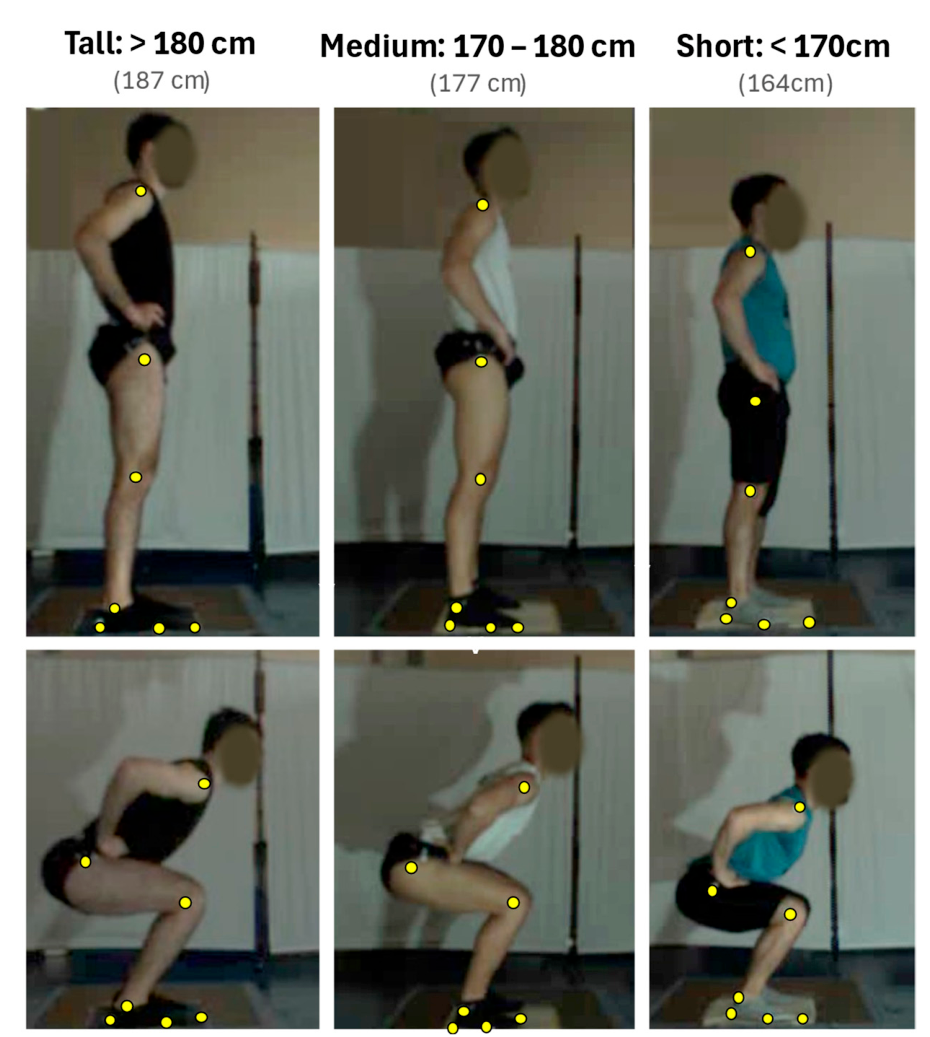
In the photo below, using squats as an example, you can see the difference in femur length. Your RDL technique will also depend on this parameter. If you take a photo from a similar angle, I can try to assess it. And if you try doing RDLs and record a video, we could give you some feedback on your technique.